Accidental Galleries: The Free Micro-Museums Hiding in Everyday Errands
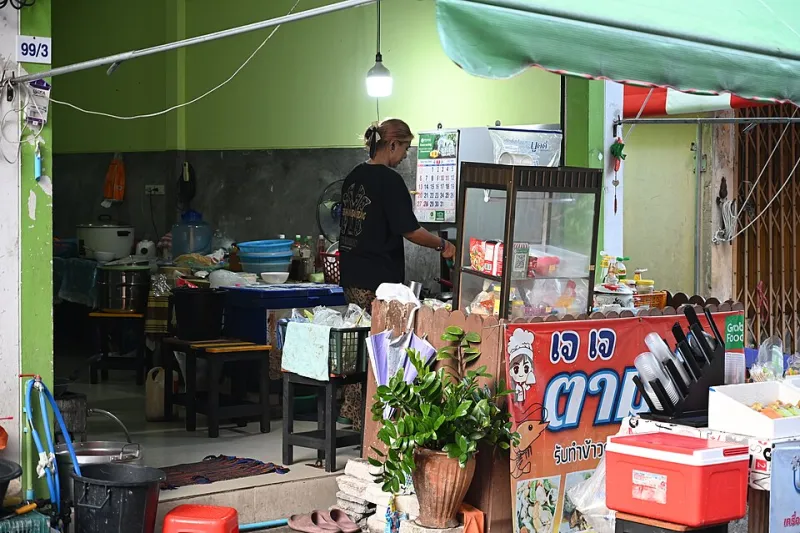
Photo: PattayaPatrol, CC BY-SA 4.0, via Wikimedia Commons
The best museum in town might be between the spin cycle and the dryer. Or next to the napkin dispenser. Across the U.S., a quiet wave of micro-exhibits is turning everyday errands into accidental culture. The scale is small. The admission is free. The vibe is: you were already here.
The Case for the Nine-Minute Museum
A micro-exhibit is exactly what it sounds like: one case, one shelf, or one wall with a tight theme and a handful of objects. It is not trying to be the Met. It is trying to be interesting for the amount of time you have while waiting for laundry, a pizza, or a library hold.
That is the nine-minute museum. You do not have to plan around it. You do not have to pay for parking. You do not have to pretend to be interested in a second wing. You just notice it, look for a minute, and go back to your life. On a crowded Saturday, that can beat a destination museum with a timed-entry ticket.
A Laundromat With a Button Problem
In a St. Paul laundromat, a glass case near the folding table holds what the owner calls the Button Archive. It started with a jar of buttons from a grandmother's sewing tin. Now it is a rotating collection of campaign buttons, uniform buttons, novelty buttons, and one that simply says I survived the office potluck.
The labels are handwritten. The case is at eye level for kids sitting on the bench. The owner spent about $18 on a thrift-store frame and $12 on a label maker. The objects were free. The exhibit works because the audience is captive and the stakes are low. You are waiting for socks. You might as well learn something about buttons.
The Library Zine Case That Started as a Lost-and-Found
A library in Tucson has a zine case near the periodicals. It began as a lost-and-found display. A staffer put out a few zines from a local maker. Now it is a rotating exhibit of about 20 zines, each with a one-sentence label. Visitors can read them in-house. The rule is no glass, no security, and trust the honor system.
It is part exhibit, part community bulletin board. Local makers submit work. Librarians rotate the selection every few months. The whole thing is run by a librarian with a laminator and a spare afternoon. It is not precious. That is why people actually look.
Pizza, Menus, and the Wall That Remembers
A pizza shop in Providence has a menu wall: vintage menus from defunct local restaurants, framed in cheap frames and hung between the booths and the bathroom door. The owner started with his father's menu from a closed pizzeria. Now customers donate menus. The wall has become a history of the neighborhood's appetite.
It is not curated by a museum professional. It is curated by nostalgia and a staple gun. The best time to visit is around 4:30 p.m., before the dinner rush, when the light hits the frames and the whole wall looks briefly intentional. You order a slice, you read a menu from 1968, you feel something. That is a museum.
How to Pull Off a Micro-Exhibit on $40
Ask permission first. Pick a narrow theme: buttons, menus, zines, local postcards, old hardware, matchbooks, grocery lists. Keep it to 10 or 15 objects. Label each one with a single sentence. Use thrift-store frames, binder clips, fishing line, and a label maker.
A realistic budget: $15 for frames, $10 for label tape, $10 for printing, and $5 for whatever you forgot. Decide whether people can touch the objects. Add a QR code only if it actually leads somewhere useful. Rotate the exhibit quarterly so it does not become wallpaper.
The exhibit should look like it belongs there. That is the whole trick. A micro-museum in a pizza shop should not feel like a museum that got lost. It should feel like the pizza shop grew a small, curious brain.
Finding (or Starting) One in Your Town
Look in laundromats, libraries, pizza shops, coffee shops, community centers, barber shops, and hardware stores. Check bulletin boards for zine swaps and tiny art shows. Ask the owner if they have a tiny museum or a collection. Search for free little art galleries and micro museums. They are more common than you think.
If you want to start one, pick a place you already go. Ask the owner. Start with one shelf. Do not wait for a grant. The best micro-exhibit is the one you can walk to.
The next time you are waiting for a large pepperoni, look around. You might already be in a museum.