The Clause Club: Why Your Next Game Night Might Involve Paragraph 14(b)
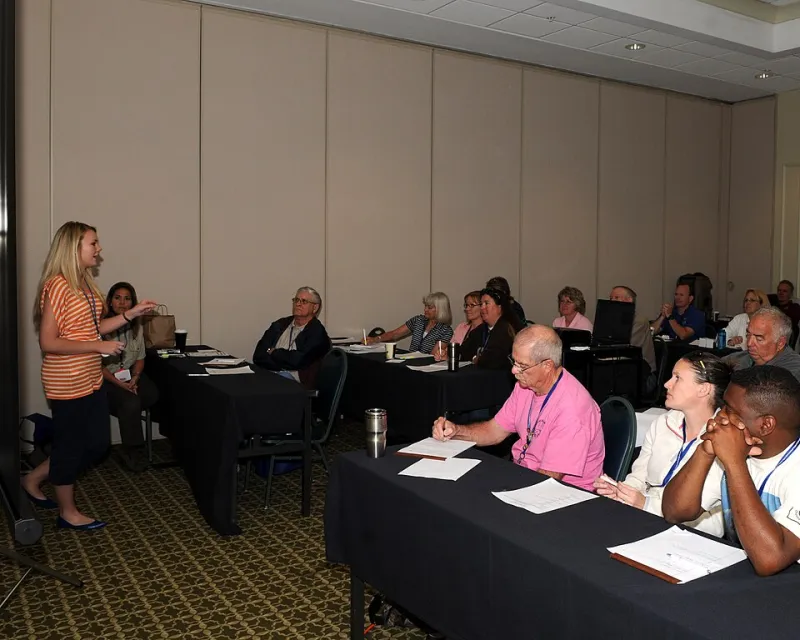
Photo: USFWS/Southeast, Public domain, via Wikimedia Commons
A living room in Columbus, Ohio. Six adults, one bowl of pretzels, every phone face-down except one. The reader clears her throat and delivers the line like a bedtime story: We may modify these terms at any time in our sole discretion, and your continued use constitutes acceptance.
Someone laughs. Someone else says, wait, read that again. Someone third pulls out a highlighter, which is the single most on-brand thing that can happen at a party in 2026.
Welcome to the terms night — a small, word-of-mouth gathering where the entertainment is the paperwork nobody reads.
How a Terms Night Actually Runs
The format is refreshingly low-effort, which is probably why it spreads.
- Four to ten people. Smaller than a dinner party, louder than a book club.
- Everyone brings one thing they actually pay for. A streaming service, a fitness app, a food delivery account, a credit card, a rental car agreement, a smart-home gadget's setup screen.
- The host prints copies. This is the whole trick. A phone screen invites scrolling. Two stapled pages invite a highlighter and a running commentary.
- Five minutes per person. Not a full read-through — a cherry-pick. Each guest reads their three most alarming or absurd lines out loud.
- Scorecards. Categories vary by household, but the reliable ones are Most Threatening Sentence, Best Attempt at Sounding Human, Best Use of the Word Sole, and the crowd favorite: A Clause That Should Be Illegal but Isn't.
- The closing ritual. Everyone picks one subscription to cancel or one setting to change before they leave. No homework, no follow-up email.
Total cost: a ream of paper and whatever is in the fridge. Total runtime: about ninety minutes.
Why Fine Print Is Accidentally Funny
Legal language is written to be skimmed and to survive a courtroom in fifty states, and those two goals produce prose that sounds like it was translated twice.
There is the vocabulary. Trusted partners. Business purposes. Including but not limited to. Sole discretion. There is the formatting comedy of a sub-clause labeled 14(b)(iii) governing a feature the app removed two years ago. And there is the scale mismatch — a twelve-thousand-word document stapled to a three-dollar-a-month service, drafted by a committee, spanning jurisdictions, and read by approximately no one.
Read it out loud and the seams show. Read it out loud in a group and the seams become the show.
2026 has supplied fresh material, too. Subscription sprawl means most people are carrying fifteen agreements they signed in a hurry. Price-change language has gotten bolder. And a lot of recent updates include a paragraph about how your uploaded content might be used to improve models — a sentence that lands differently when a friend reads it to your face.
The Part That Isn't a Joke
Strip away the laughing and a terms night is a consumer-literacy workshop wearing a party hat. Nobody leaves knowing more about contract law. Everyone leaves knowing more about their own accounts.
The clauses that cause real headaches are rarely the strange ones. They are the boring ones, the ones that get skimmed because they are written in the same flat tone as everything else on the page.
The Five-Minute Checklist Before You Tap I Agree
You do not need to read all of it. You need to find these, and most documents have a table of contents or a search function that will get you there in under five minutes.
- Auto-renewal and the exit ramp. When does it renew, and how do you cancel? If cancellation requires a phone call during business hours, that is the clause doing its job.
- The arbitration clause and any class-action waiver. This one strips you of the option to sue in court or join a group claim. It is usually near the end and usually capitalized, which is the drafters' way of saying this one matters.
- Permission to change the price. Some agreements grant it with notice, some without. Check whether notice means an email you'll ignore or a banner you'll never see.
- The content license. What rights do you grant over photos, reviews, recipes, or messages you post? Perpetual, worldwide, and sublicensable means the company can do quite a lot with your stuff.
- Anything about AI or model training. Look for words like improve, develop, and machine learning.
- Sharing with partners. Vague categories are the point. Trusted partners is not a company name.
- Termination without notice. Can your account vanish, and what happens to anything you have stored there?
- Governing law and venue. Which state's rules apply if something goes wrong?
- Free trial conversion. Note the exact date, then set a calendar reminder. This one costs people more money than every other clause combined.
- Liability limits and warranty disclaimers. The block of all-caps text. It exists to cap what you can recover.
None of this is legal advice, and nobody at the party is your lawyer. The point is narrower and more useful: know what you agreed to, and know which line to search for next time.
Host Etiquette, Briefly
A few ground rules keep the night friendly rather than smug.
Use your own accounts, not a friend's. Don't screenshot anything personal. Don't turn it into a lecture about someone's spending — the scorecard is for the company, not the guest. Keep the reading to three or four lines per person so the room stays engaged. And end on the cancel-one-thing ritual, because leaving people with a small, satisfying action is what turns a joke into a habit.
The appeal is easy to explain: it is cheap, it is social, it produces a genuinely great story, and once a year it saves somebody eighty dollars. Fine print was never meant to be read. Reading it out loud, it turns out, is half the fun.