Counter Culture: The Feline Mayors of America’s Corner Stores
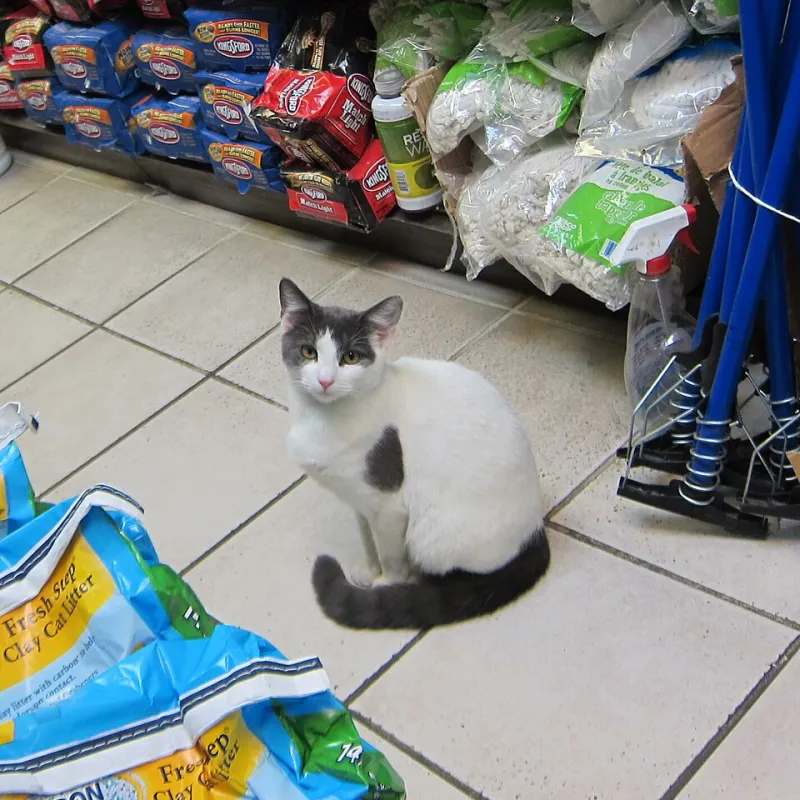
Photo: Seth Werkheiser, CC BY-SA 2.0, via Wikimedia Commons
There’s a special kind of fame that comes from sleeping on a stack of lottery tickets while a line of strangers quietly accepts you as management. In 2026, the corner-store cat is not just a local mascot. It’s a tiny neighborhood celebrity with a fan base, a lore, and sometimes a hand-drawn map pin. Call it counter culture: the soft-power reign of the bodega cat.
You don’t need a blue-check account to understand the appeal. A bodega cat is part ambiance, part pest control, part emotional support for people buying one banana and a scratch-off. The cat does not care about your schedule. The cat has never once rushed a transaction. And somehow, that makes the whole store feel less like errand purgatory and more like a place where somebody knows your usual order.
The 8-by-10 Mayors of the Block
Bodega cats have been part of city life for decades, especially in New York, Philadelphia, Chicago, and other dense neighborhoods where corner stores operate like community living rooms. But the internet has changed their reach. A cat that used to be famous only to the 6 a.m. coffee crowd can now end up on a neighborhood subreddit, a TikTok montage, or a fan-made Google Map titled something like “Corner Cats of the District.”
The result is a strange, charming civic archive. People trade sightings. They note which store has the friendliest tabby, which one has a cat that only appears near the mop bucket, and which one has a gray cat with a very specific opinion about the freezer aisle. The maps are unofficial, nerdy, and weirdly heartfelt — like birdwatching, if the birds ran a cash register.
Three Corner-Store Regulars
You don’t have to name names to recognize the types. Every bodega-cat fan network has its archetypes.
The Register Loaf. This cat has mastered the art of occupying the exact square inch of counter space that makes customers say “aww” but does not actually block the card reader. It accepts chin scratches on a strict appointment basis. Its brand is calm authority.
The Aisle Inspector. This one follows shoppers with the quiet confidence of a store manager who suspects you’re about to put back the expensive jerky. It may inspect your basket. It may flop over in front of the freezer. It is not helping, but it is definitely supervising.
The Back-Room Phantom. Rarely seen, deeply discussed. A flash of tail near the mop closet. A paw under the door. The Phantom is the local legend, the cat equivalent of a speakeasy password. When it finally appears, regulars act normal while internally texting the group chat.
In Brooklyn, San Antonio, and plenty of towns in between, these cats become part of the store’s identity. People don’t just say “the deli on the corner.” They say “the one with the orange cat.” That’s not a small thing. That’s branding.
The Map in the Group Chat
The fan infrastructure is delightfully low-tech. A neighbor starts a list. Someone turns it into a map. Someone else adds a note: “friendly but bites if you touch the tail.” A social account appears, posting blurry photos with captions like “local businessman declines comment.” Before long, the cat has a following that has nothing to do with the store’s prices and everything to do with the fact that it looks like a furry dumpling with a job.
This is the same energy as the internet’s obsession with library cats, hardware-store dogs, and the one squirrel on campus that everyone agrees is “different.” It’s low-stakes, local, and pleasantly unoptimized. No brand strategy, no influencer drop. Just a cat, a counter, and a city block doing its thing.
The Health Code and the Deli Case
Here’s where the charm meets the clipboard. Store owners have to balance affection with practical rules. Health departments generally want animals kept away from food prep and storage areas, and inspectors are not known for being swayed by a cat’s excellent face. A shop owner who loves the store cat still has to think about where the cat sleeps, what the cat touches, and how to keep customers safe without turning the place into a fortress.
Many stores handle this with simple boundaries: a bed behind the counter, a gate near the stockroom, a sign asking customers not to feed the cat, and a clear separation between the cat’s territory and any area where food is prepared or stored. It’s not glamorous, but it’s the unglamorous stuff that lets the cat stay. The best setups feel less like a rulebook and more like a roommate agreement — everybody knows where the litter box is and nobody puts tuna near the register.
There’s also the community goodwill factor. A store cat can calm a tense block, give kids something to look forward to, and turn a quick stop into a tiny ritual. Owners know this. They also know that not every customer loves cats, not every cat loves customers, and not every day is a petting zoo. The good ones read the room. The cat usually does, too.
How to Be a Good Guest
If you’re visiting a corner-store cat, here’s the unofficial shopper etiquette:
- Ask first. A quick “Is it okay if I say hi?” goes a long way.
- Let the cat come to you. Some are greeters. Some are philosophers. Some are just trying to nap on the receipts.
- Skip the people food. Unless the owner says otherwise, don’t offer snacks. Human food is not a balanced cat diet, and the deli case is not a buffet.
- Watch the door. Cats are fast, and a busy sidewalk is not the place for a breakout episode.
- Respect the no-touch signs. They exist for a reason, even when the cat looks like a loaf of bread with ears.
Why the Corner Cat Still Works
The bodega cat is a small, furry reminder that not every local celebrity needs a publicist. Some just need a warm spot near the register and a neighborhood willing to notice. In a year full of big, loud, algorithmic everything, there’s something refreshing about a fan club built on blurry photos and a hand-drawn map.
The next time you pop into a corner store and see a tail flick behind the counter, consider it a tiny civic landmark. Buy your snack. Pay your respects. And for heaven’s sake, don’t touch the tail unless the sign says so.